
Article
From off-grid villages to city rooftops, households are choosing solar not out of idealism but to escape rising bills and relentless load shedding.

Rise and shine has come to take on a whole new meaning for many in Pakistan. From a lifestyle confined between ‘sun up to sun down’ a large number have been able to break through those confines due to rapid solarization.
“Ismael”, originally from a village from Mailsey in South Punjab, says that while in the village, when they were off grid, their life was also within the sun up to sun down mode. He moved with his family to Karachi in search of better opportunities.
However, he realized that despite having the facility of electricity in the city,”with my fixed salary, it became very difficult to pay the bill because the charges kept increasing. Despite access to electricity, long hours of ‘load shedding’ (power shut downs by the Utility) made life difficult for my wife, aged mother and school going children.”
Living in the city, not paying the bill was not an option, even if it was eating into other essential expenses. However, when he took a trip to the village after a couple of years, what he saw turned his thoughts in another direction. “Most households who could afford them had bought solar plates for lighting bulbs and running fans and keeping the mobiles charged. The bigger farmers were even running their tubewells through solar power.”
Returning to the city he knew this was the only solution for uninterrupted supply of electricity. He looked around for options and was told about EcoEnergy, a company focussing on enabling low income households to access electricity through solarization.

Jeremy Higgs, COO of EcoEnergy explained their altered business model, after they were incubated by Invest2Innovate. “We determined that there was a need in rural villages for lighting, mobile charging and cooling fans. We provided solar solutions on a rent-to-own basis through which we reached over 10000 customers we also acquired and other 4000 through the acquisition of Bright Alight. Over time, we discovered that the model was difficult to scale.
Affordability continued to be a challenge and investment funds were unwilling to invest in Pakistan at that time in 2018. The Company pivoted to solutions for urban customers rooftop net metering and rural farms, both of which had the ability to pay for the solutions for a quick
kit pay back. Over the course of a year, the company installed over 1 megawatt of capacity.
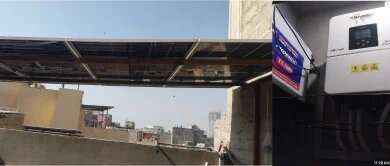
Ismael started small. ’I started with a 2 plate system with a 1 KV inverter and battery, and along with the installation, the cost was about 145,000. That was a big amount for me and on my request, they split it into three installments. I was able to get a second job and my wife also started working and now we have an 8 plate system that takes the load of the entire house, including a motor attached to the water tank, fridge and even iron. And the best thing is that the bill is very nominal now.”
He of course is one of millions of Pakistanis who are making the switch. According to Nida Farid, CEO SaveJoules and Member UN Council of Engineers for Energy Transition, “many people are now going almost off grid because battery prices have fallen dramatically. In the Pakistani context, where grid prices continue to be the highest in the region, it is increasingly making sense to install batteries because the peak grid price as well as generative fuel cost during load shedding the Math can go a little off if you have an expensive supplier. But, for those getting the best or even good prices in the market, it is making a lot of sense especially when one takes into account the increased reliability and reduced stress during the day.”
The question still needs to be asked; is rapid solarization reflective of the intent stated in the (over?)ambitious Nationally Determined Contributions submitted in 2021 that showed a pathway of shift to 60% by 2030? True that the lion's share of meeting that target was laid at the door of hydroelectric power, and the electronic vehicles policy was announced around the same time to contribute to the mitigation targets pledged in the NDC.
These promises to mitigate by a country with less than 1% emission and sitting atop the global vulnerability index were all an expression of a journey on a greener pathway. But those decisions were at a national policy level which barely, if ever, are drivers of consumer behaviour. In a choice between altruistic and pragmatic, the latter wins hands down.
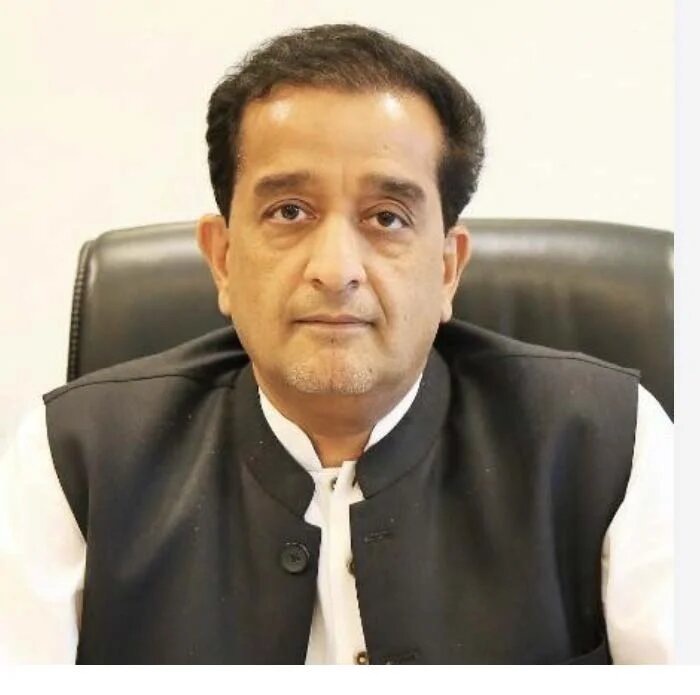
Former advisor to the PM on Climate Change and Environment and IUCN Vice Chair Malik Amin Aslam categorically says “the solarisation occurring all over Pakistan is driven by the economic stimulus of unaffordable electricity prices and further facilitated by dropping solar prices as well and incentive of net metering and low cost financing made available through banks. Overall it is the largest and quickest solarisation transition in the world and has become a case study for people-led Clean Energy transition.”
Green Banking Guidelines issued in 2017, and now with the roll out of the Green Taxonomy by the country's Central Bank, State Bank of Pakistan, along with financial institutions responding to global trends and commitments and recognising new niche markets for consumers, newer financial products are being developed by the Banks and to capitalize on this new consumer need.
Along with this, the other stipulation by SECP, (Security and Exchange Commission of Pakistan) of mandatory reporting of ESG (Environmental, Social, Governance) compliances from January 2026 has compelled the corporate sector to pivot from the traditional CSR (Corporate Social Responsibility), transitioning through Creating Shared Value to the ESG portfolio, with banks and energy companies catering to not just the large industrial clientele but to individual clients.
They may have also taken a cue from a successful model launched by the World Bank stream for PPAF (Pakistan Poverty Alleviation Fund) through its implementation partners. For instance, the one which piloted village level mini and micro grid systems in Sindh through Indus Earth Trust went beyond just providing energy for lights, fans and phone charging.
The programme was embedded with elements of social entrepreneurship, gender economic empowerment and sustainability through equity of the local community in the entire project installation and maintenance.
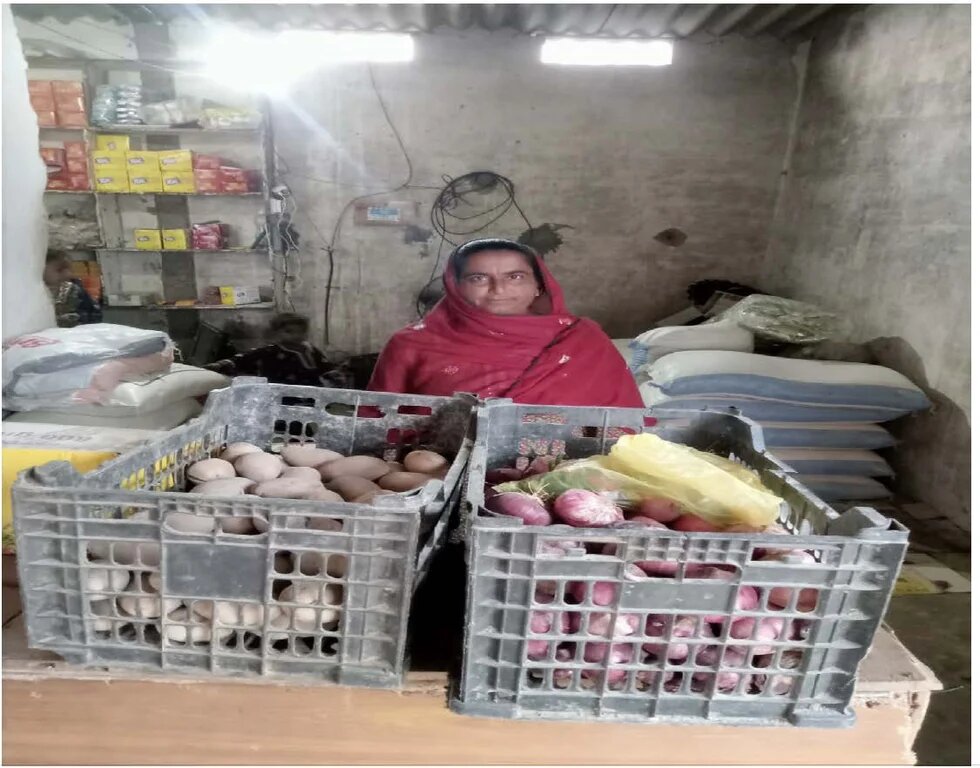
Success stories like those of Saima Jokhio of a village in Gharo led to replication of the same entrepreneurial model elsewhere in other areas. The electrification through a separate meter installed for enterprise development allowed her to scale her shop from a small room of her house to a full fledged store outside. It brought her accolades as well as cash reward from PPAF which she fully reinvested in the upgrade of the store, build a couple more shops, and a supply depot for earthen water pitchers and is now also a proud owner of a stall selling fuel wood.
Solar for enterprise model also triggered the replication of this example, enabling young men and women to become independently economically empowered in a market devoid of jobs. Community benefit also ensured that the grid was maintained diligently.
In a country that is beset with energy poverty despite producing twice the amount of electricity generated, large swathes of the country are without access to the grid even 78 years after the creation of the country.
While Pakistan’s ‘solar rush,’ as it is being called, is a unique success story, one must be mindful of the downside of its ease of availability and usage. Environmentalists have been sounding notes of warning that the use of solar water pumps for water abstraction will play havoc with the already deteriorating ground water situation.
Politically motivated incentives through members of Parliament to gain favor of voters and heavy subsidies have contributed to the solarization in the agricultural sector, especially in areas outside the canal command. In arid, and water scarce areas this has led to unrestricted use of solar energy to run water pumps and tubewells, further lowering the water table.
This situation is especially noted in the province of Balochistan, which is in the process of developing its renewable energy policy. Safdar Hussain and Rabia Mirani, members of the team working on the policy have also cited the affordable banking packages that allow to customize community needs for individual needs, as well as determine whether a micro or mini grid would suit the community.
Rabia Mirani, who is part of the policy formulation team as a member of Institute of Development and Practices that is giving its input to Social Development and Policy Institute gives a clear picture for Balochistan by saying
“ In Balochistan, grid coverage is limited and unreliable. As a result, small household solar systems (off-grid and backup) are widely used in rural areas and increasingly in urban areas as well. District-level surveys — particularly in Nushki — show high household reliance on solar PV, whereas national studies (TransitionZero/PRIED) provide broader provincial-level trends.
According to the national PRIED residential survey, solar adoption rises sharply with household spending. For instance, Low-expenditure households (≤ PKR 15,000/month): ~38% adoption, while for High-expenditure households (> PKR 50,000/month): ~88% adoption
This indicates that urban rooftop and larger systems are primarily adopted by middle- and high-income households, while low-income and rural households mostly rely on smaller off-grid systems and basic solar kits.”
The World Bank has also mapped the potential for mini-grids across the country with recommendations for a hybrid model for implementation through Public Private Partnerships and development agencies like RSPNs, like the PPAF-IET model cited above for Sindh.. This report shows the linking of the offgrid systems to the main grid in the future, as they are seen as an interim fix to the energy poverty resulting from the geographic and development level diversity.
Energy poverty, and the need for electrification to increase working hours, whether to indulge in extra entrepreneurial activity after the day’s work is over have been the biggest drivers to bring in community acceptability to a totally ‘new’ means of accessing electricity. This is true across the board for the low income urban, peri urban as well as rural communities.
The dividends have been as socially varied as well. In places where youngsters of school or college going age are expected to help with the tasks of elders that supplement income, access to light has allowed them to carry on with their educational activities after dark.
Same goes for women who could practise their crafts making and embroidery skills which also go towards supplemental income if they are able to gain access to the market. The ancillary benefits through connectivity in a country with a large teledensity footprint has brought in additional benefits. Many community women who lack the physical access to markets because of cultural norms have received digital literacy training from women empowerment NGOs and banks who are expanding their client base through inclusion of women. These women are now marketing their wares online.
While Pakistan’s energy is complex and has been influenced by a variety of factors. The frequent price hikes, attributed to factors like ‘circular debt’ resulted in a large part of the industrial sector opting for captive power to gain the essential reliability needed for production.
This blame for unreliability was borne by a poor transmission and distribution network as the generative capability had been increased without upgrading the former. Then came the solar rush and the demand from the grid fell even more. This is when the bombshell of capacity charges fell on the consumers and solarization by larger users was almost made into a negative.
However smaller communities and individually owned units were not as affected and the hue and cry against the unjust burden of capacity charges on consumers resulted in a take down to the extent that solar began to be seen as an economically viable option again. The acceptance is growing rapidly and the world is waiting to see how it pans out in the long run before replicating it in apples to apples situation in similar geographies and economies.


